A referral is a formal external request for review of a proposed activity on Nak’azdli territory. Proposed activities may include forestry cut blocks, mining exploration, road construction, water licenses, environmental permits, or other land-use activities.
For the Province, referrals are a primary way of conferring its legal duty to consult, often by directing proponents to engage with First Nations directly. For Nak’azdli Whut’en, referrals create an opportunity for leadership and Keyoh to assess proposed projects and determine whether they align with our Dakelh laws, stewardship priorities, and community values.
Yinka Huwunline receives referrals and coordinates the review process on behalf of the Nation. This includes ensuring Keyoh families have the information they need to understand potential impacts; bringing in registered professionals where appropriate; coordinating meetings with proponents; gathering and consolidating Keyoh input; and preparing a comprehensive response to the Crown and the proponent.
Referrals are reviewed for potential impacts on Keyoh areas, cultural sites, traplines, wildlife, salmon, community land use, and other important values. The process reflects Nak’azdli Whut’en governance:
- Chief and Council provide political oversight and strategic direction;
- Keyoh families, as the customary title-holders and rightful decision-makers on their territories, provide input gathered and coordinated by Keyoh representatives;
- Yinka Huwunline facilitates technical review, administrative support, and Guardian site visits as needed;
- Lastly, Yinka Huwunline prepares and submits the Nation’s formal response, which may outline concerns, required changes, conditions, or refusal.
Yinka Huwunline also works to ensure the Crown and proponents respect Aboriginal Rights and to develop stronger, consent-based decision-making frameworks. The referral process continues to evolve alongside implementation of the Keyoh Governance Strategic Plan to better support Keyoh and Nation priorities.
For Nak’azdli Whut’en, referrals are not just an administrative check-box. When carried out properly, they are one of many effective tools in rebuilding jurisdiction and advancing free, prior, and informed consent (FPIC).
Referrals and Forestry Partnerships
Nak’azdli Whut’en holds forestry volume licenses in a defined operating area and works with partner licensees and operators to harvest according to our stewardship values and standards. These partnerships encourage greater accountability, including additional criteria for harvesting operations, beyond standard regulatory requirements.
Where forestry licensees operate outside of partnership agreements with Nak’azdli Whut’en, they are required to submit referrals, but these projects are not subject to the same conditions that apply within Nak’azdli-led operating areas.
This distinction reflects Nak’azdli Whut’en’s long-term commitment to revitalizing our authority while continuing to protect rights and interests across the territory.
Process and Timelines
Clear processes create certainty for all parties. Proponents and the Crown are expected to respect the process and timelines set by Nak’azdli Whut’en, and to abide by the decisions made through the Nation’s referral process. In return, Nak’azdli Whut’en commits to timely, good-faith review and feedback.
Proponents are strongly encouraged to contact Yinka Huwunline before submitting a referral, as early discussions help ensure completeness, accuracy, and efficiency.
Due to the overwhelming volume of submissions and the time required for adequate review, Yinka Huwunline aims for the following timeline once a referral is received:
- Within 5 business days: Acknowledgement of receipt and confirmation of completeness, or notice of missing information.
- 30 days: Straightforward projects (e.g., permit renewals, maintenance activities, projects affecting one Keyoh).
- 90 days: More complex projects (e.g., mineral exploration, projects affecting multiple Keyoh).
- Major Projects: Timelines determined collaboratively with proponents, regulators, and rights holders.
Regardless of these guidelines, Nak’azdli Whut’en does not provide consent without serious consideration; delayed or lack of response does not indicate consent.
NW YH - Referrals Flowchart
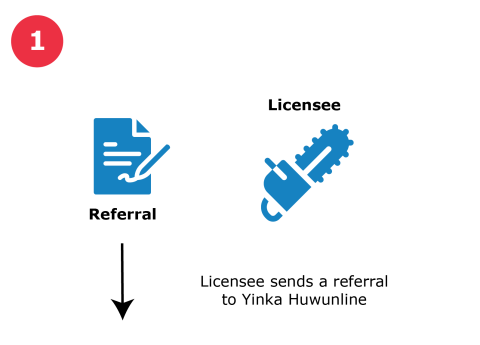
1. Licensee shares information on a harvesting proposal
a. Yinka Huwunline receives information from licensees about a proposed harvest through the Portal.
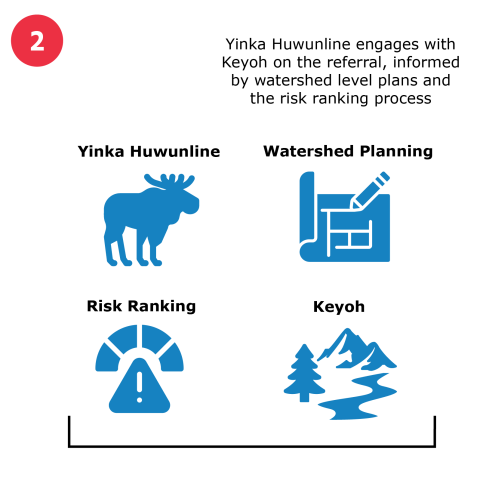
2. Early Engagement
a. Yinka Huwunline puts each harvesting proposal through the Risk Ranking landscape level analysis to determine which harvest areas (cut blocks) will proceed to in-depth site level and Keyoh assessments.
b. If a harvesting proposal passes the Risk Ranking, Yinka Huwunline will work with Keyoh to determine how to proceed.

3. Licensee Engagement
a. Based on the outcomes of Keyoh engagement, Yinka Huwunline will set up a meeting with the licensee.
b. During these meetings, Keyoh can outline concerns they have with the proposal received through the proposal to their values and management interests, and Yinka Huwunline will assist in adjusting the proposal to Keyoh and Yinka Huwunline satisfaction.

4. Cutting Permit Application
a. The Licensee submits a Cutting Permit Application to the Province based on the engagement with Keyoh. Once Keyoh is satisfied with any changes to the harvest proposal, Yinka Huwunline will send the referral response to the Province and to the Licensee.

5. Referral Submission
a. Based on the licensee’s cutting permit application, the Province issues a referral to Nak’azdli Whut’en. This is formally submitted to the Chief, but in practice comes through the Portal to Yinka Huwunline, and is sent to all impacted Keyoh
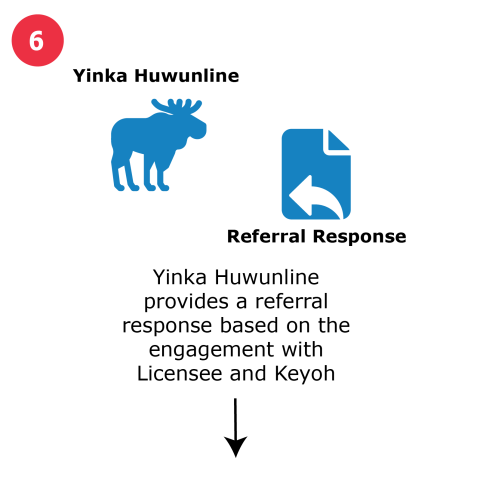
6. Referral Response
a. Based on the engagement between Licensee and Keyoh in step 3, Yinka Huwunline provides a response to the referral.

7. Cutting Permit Decision
a. Incorporating the referral response, and a lot of other information submitted by the licensee, the Province decides whether or not to issue a cutting permit.